

Mental challenges are a part of life, but the way you respond to them determines your success and happiness. Whether you’re dealing with workplace pressure, personal setbacks, or everyday stress, building a resilient mindset helps you stay focused and move forward. Mental strength growth is not about hiding emotions or pretending to be fearless. Instead, it’s about developing healthy habits, emotional resilience, and the confidence to face challenges with a positive attitude….See More
Many people ask how to build mental strength or wonder whether being mentally strong is something you’re born with. The truth is that anyone can strengthen their mindset through consistent practice and the right strategies. Just like physical fitness improves with regular exercise, your mind becomes stronger when you challenge it, learn from failures, and adopt positive routines.
In this guide, you’ll learn what mental strength growth means, why it matters, the signs that indicate you need to improve it, and 25 practical tips to become more resilient, confident, and emotionally balanced.
What Is Mental Strength Growth?
Definition of Mental Strength
Mental strength growth is the ongoing process of improving your ability to manage emotions, overcome obstacles, adapt to change, and stay committed to your goals. It combines self-discipline, emotional control, resilience, and a positive mindset to help you perform at your best during both easy and difficult times.
If you’ve ever asked yourself what is mental strength, think of it as your ability to stay calm under pressure, recover from setbacks, and continue moving forward even when life becomes challenging.
Mental Strength vs Mental Toughness
Although these terms are often used interchangeably, they have different meanings. Mental toughness focuses on performing well under pressure and staying determined during difficult situations. Mental strength growth, on the other hand, is broader. It includes emotional awareness, adaptability, healthy coping skills, and long-term personal development.
Mental toughness helps you push through challenges, while mental strength helps you understand your emotions and make wise decisions.
Mental Strength vs Emotional Strength
Emotional strength refers to your ability to manage feelings such as anger, fear, disappointment, and sadness in healthy ways. Mental strength includes emotional strength but also involves problem-solving, discipline, confidence, and resilience.
Someone with emotional strength remains calm during stressful situations, while someone with strong mental strength combines emotional control with practical action.
Mental Strength vs Resilience
Resilience is the ability to recover after setbacks or failures. Mental strength growth goes one step further by helping you prepare for challenges before they happen, maintain a positive outlook, and continue improving even after difficult experiences.
Resilience allows you to bounce back. Mental strength helps you bounce back stronger.
Why Mental Strength Matters
Strong mental habits influence nearly every area of life. They help you make better decisions, manage stress, stay productive, and maintain healthier relationships. People with greater mental strength are often better equipped to handle uncertainty, criticism, and failure without losing confidence.
Whether you’re pursuing career goals, improving your health, or building meaningful relationships, investing in mental strength growth provides long-term benefits that extend far beyond temporary success.
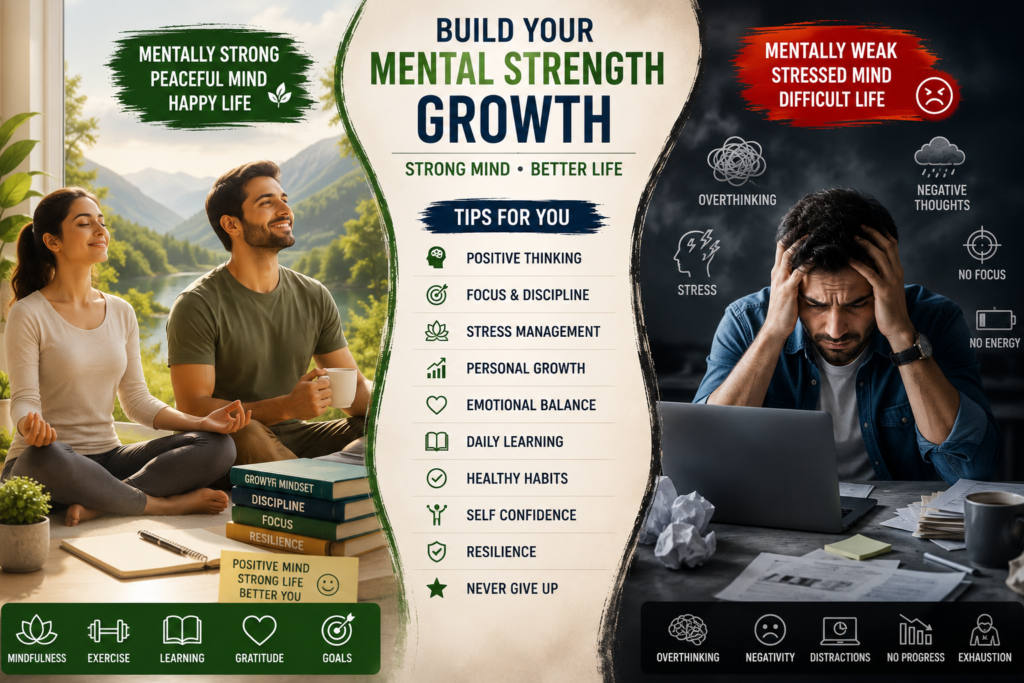
Benefits of Mental Strength Growth
Developing a resilient mindset creates positive changes in both your personal and professional life. Here are some of the biggest benefits.
Better Emotional Control
Mentally strong people understand that emotions are natural, but they don’t allow temporary feelings to control their actions. Better emotional regulation leads to healthier communication and improved decision-making.
Increased Confidence
Every challenge you overcome strengthens your belief in yourself. As mental strength growth continues, confidence develops naturally because you begin trusting your ability to solve problems and handle uncertainty.
Improved Decision Making
Stress often clouds judgment. A stronger mindset allows you to evaluate situations calmly, consider different perspectives, and choose solutions based on logic rather than fear.
Higher Productivity
People who improve their mental resilience are less likely to procrastinate and more likely to stay focused on meaningful goals. If you’re wondering how to improve mental strength, creating productive daily habits is one of the best places to start.
related topic: https://motiviqo.com/100-productivity-quotes-to-boost-focus-and-results/
Stronger Relationships
Mental strength improves communication, empathy, patience, and emotional intelligence. These qualities help build trust and strengthen relationships with family, friends, and colleagues.
Better Stress Management
Life will always include challenges, but mentally strong individuals develop healthy coping strategies instead of reacting impulsively. Exercise, mindfulness, journaling, and positive thinking all contribute to better stress management.
Faster Recovery From Failure
Failure becomes a lesson instead of a stopping point. Rather than dwelling on mistakes, mentally strong people analyze what happened, learn from the experience, and move forward with greater wisdom.
Signs You Need to Build Mental Strength
Recognizing areas for improvement is the first step toward personal growth. If you notice these signs in your life, it may be time to focus on mental strength growth.
Fear of Failure
Do you avoid opportunities because you’re afraid of making mistakes? Fear of failure can prevent progress and limit your potential. Learning to view failure as part of growth helps you become more resilient.
Negative Self-Talk
Constantly criticizing yourself reduces confidence and motivation. Replacing negative thoughts with realistic and encouraging ones can significantly improve your mindset over time.
Difficulty Handling Criticism
Constructive feedback helps us improve, but many people take criticism personally. Mentally strong individuals listen carefully, learn from useful advice, and ignore unnecessary negativity.
Giving Up Easily
Challenges are inevitable, but quitting at the first obstacle prevents long-term success. Developing perseverance is an important part of mental strength growth because lasting achievements require consistency.
Constant Stress and Anxiety
Feeling overwhelmed every day may indicate that your coping strategies need improvement. Learning relaxation techniques, setting healthy boundaries, and practicing mindfulness can reduce stress while strengthening emotional resilience.
25+ Proven Mental Strength Growth Tips
1. Develop Self-Awareness
Self-awareness is the foundation of personal development. Pay attention to your thoughts, emotions, strengths, and weaknesses without judging yourself. Regular self-reflection helps you identify habits that support or limit your progress.
Journaling, meditation, and honest feedback from trusted people can all increase self-awareness.
2. Accept What You Cannot Control
One of the biggest sources of stress is trying to control things beyond your influence. Instead of worrying about external circumstances, focus your energy on your actions, attitude, and responses.
Learning acceptance doesn’t mean giving up it means directing your attention toward what you can actually change.
3. Build Positive Habits
Daily routines shape long-term results. Small habits such as reading, exercising, sleeping well, and practicing gratitude gradually strengthen your mindset.
Many people searching how to gain mental strength discover that consistency matters far more than perfection. Even small improvements repeated daily create remarkable results over time.
4. Practice Daily Gratitude
Gratitude shifts your attention from problems to possibilities. Spend a few minutes each day writing down three things you’re thankful for. This simple habit improves optimism, reduces stress, and encourages a healthier perspective on life.
5. Challenge Negative Thoughts
Negative thinking often exaggerates problems and underestimates your abilities. Whenever you notice self-doubt, pause and ask yourself whether your thoughts are supported by facts.
Replacing limiting beliefs with balanced, realistic thinking is one of the most effective ways to strengthen your mindset and continue your journey of mental strength growth.
25+ Proven Mental Strength Growth Tips
6. Improve Self-Discipline
Self-discipline helps you stay committed even when motivation fades. Create routines that support your goals and avoid relying on willpower alone. Whether it’s waking up earlier, exercising regularly, or limiting distractions, discipline is one of the strongest foundations of mental strength growth.
7. Learn From Failure
Failure is not the opposite of success it’s part of the journey. Instead of dwelling on mistakes, analyse what went wrong and use the lessons to improve. Every setback is an opportunity to become wiser and more resilient.
8. Set Realistic Goals
Clear and achievable goals provide direction and motivation. Break large objectives into smaller milestones so you can track progress and celebrate improvements along the way. This approach keeps you motivated without feeling overwhelmed.
9. Keep Your Promises to Yourself
When you follow through on personal commitments, you build trust in yourself. Completing small daily tasks strengthens confidence and reinforces positive habits that support long-term success.
10. Step Outside Your Comfort Zone
Growth happens when you challenge yourself. Try new experiences, learn unfamiliar skills, or take on responsibilities that push your limits. If you’re searching for how to increase mental strength, regularly facing manageable challenges is one of the most effective strategies.
11. Build Emotional Intelligence
Understanding your emotions and recognizing how others feel improves communication and decision-making. Emotional intelligence helps you respond thoughtfully instead of reacting impulsively during stressful situations.
12. Practice Mindfulness
Mindfulness teaches you to stay present instead of worrying about the past or future. Spending just a few minutes each day focusing on your breathing or surroundings can improve concentration, reduce stress, and support mental strength growth.
13. Exercise Regularly
Physical activity benefits both your body and mind. Exercise releases endorphins, reduces anxiety, improves sleep, and increases self-confidence. Many people ask how does strength training improve mental health. Strength training helps reduce stress, boosts mood, enhances confidence, and develops discipline, making it an excellent habit for mental well-being.
14. Sleep Well
Quality sleep allows your brain to recover and process emotions effectively. Aim for seven to nine hours of sleep each night to improve focus, memory, and emotional regulation.
15. Eat for Brain Health
A healthy diet supports mental performance. Foods rich in omega-3 fatty acids, antioxidants, lean proteins, and whole grains nourish your brain and help maintain energy levels throughout the day.
16. Read Every Day
Reading expands your knowledge, improves critical thinking, and exposes you to different perspectives. Even 15–20 minutes of daily reading contributes to continuous learning and personal development.
17. Limit Negative Influences
Your environment affects your mindset. Reduce exposure to constant negativity, unhealthy relationships, and excessive social media if they leave you feeling drained or discouraged.
18. Learn Problem-Solving Skills
Challenges become easier to handle when you focus on finding solutions rather than dwelling on problems. Break complex situations into smaller steps and evaluate practical options before taking action.
19. Practice Patience
Success rarely happens overnight. Patience helps you remain committed during slow progress and prevents frustration from causing you to quit too soon.
20. Focus on Progress, Not Perfection
Perfectionism often creates unnecessary stress. Instead of waiting for flawless results, appreciate consistent improvement. Every small step contributes to mental strength growth and builds confidence over time.
21. Build Healthy Relationships
Supportive relationships provide encouragement during difficult times. Spend time with people who inspire, motivate, and challenge you to become a better version of yourself.
22. Learn Stress Management
Managing stress effectively improves both mental and physical health. Deep breathing, meditation, exercise, and spending time outdoors are simple ways to reduce stress and maintain emotional balance.
23. Stay Consistent
Consistency produces better results than occasional bursts of motivation. Create routines that fit your lifestyle and commit to practicing them every day, even when progress feels slow.
24. Celebrate Small Wins
Recognizing your achievements increases motivation and reinforces positive habits. Celebrate milestones, no matter how small, to remind yourself that progress is happening.
25. Never Stop Learning
Curiosity keeps your mind flexible and open to new opportunities. Read books, take courses, develop new skills, and seek experiences that challenge your thinking. Lifelong learning is one of the most rewarding parts of mental strength growth.
Daily Habits That Build Mental Strength
Morning Routine
Start your day with purpose by avoiding your phone for the first few minutes. Stretch, hydrate, review your goals, or spend time planning your priorities.
Journaling
Writing your thoughts helps you process emotions, identify patterns, and track personal progress. Journaling is also an excellent way to reflect on challenges and celebrate achievements.
Meditation
Meditation improves focus, reduces anxiety, and increases emotional awareness. Just 10 minutes a day can strengthen your ability to stay calm under pressure.
Exercise
Daily movement improves mood, energy, and confidence. Whether it’s walking, yoga, strength training, or cycling, regular exercise supports both physical and mental health.
Reading
Reading personal development books, biographies, or educational material expands your thinking and introduces new ideas for overcoming challenges.
Reflection Before Bed
Take a few minutes each evening to review your day. Ask yourself what went well, what you learned, and what you can improve tomorrow. Reflection encourages continuous mental strength growth.
Common Mistakes That Weaken Mental Strength
Avoiding Challenges
Avoiding difficult situations may provide temporary comfort, but it prevents growth. Facing challenges gradually builds resilience and confidence.
Comparing Yourself to Others
Everyone follows a different journey. Constant comparison reduces self-esteem and distracts you from your own progress. Focus on becoming better than you were yesterday.
Negative Self-Talk
Your inner dialogue shapes your confidence. Replace harsh self-criticism with encouraging and realistic thoughts that support improvement.
Seeking Constant Approval
Depending on others for validation can weaken your confidence. Learn to appreciate your own progress instead of relying on outside opinions.
Ignoring Physical Health
Poor nutrition, lack of sleep, and inactivity negatively affect mental performance. Caring for your physical health strengthens your mind and supports lasting mental strength growth.
Mental Strength Exercises You Can Start Today
Visualization
Imagine yourself successfully completing a difficult task. Visualization prepares your mind for challenges and increases confidence before taking action.
Deep Breathing
Practice slow breathing whenever you feel overwhelmed. Controlled breathing lowers stress levels and improves focus during difficult situations.
Gratitude Writing
Write down three things you’re grateful for every day. Gratitude shifts attention away from negativity and encourages a healthier mindset.
Cold Showers (Optional)
Some people use cold showers to build discipline and resilience. While optional, this practice can help you become more comfortable with temporary discomfort.
Daily Challenge Exercise
Challenge yourself to do one difficult thing every day, whether it’s speaking in public, learning a new skill, or having an honest conversation. Small challenges gradually increase confidence.
Positive Affirmations
Start your day with encouraging statements that reinforce your goals and strengths. Positive affirmations help replace limiting beliefs with healthier thought patterns.
How to Stay Mentally Strong During Difficult Times
Handle Stress
Focus on healthy coping strategies such as exercise, mindfulness, and talking with supportive friends instead of avoiding your problems.
Overcome Failure
Accept that setbacks are part of growth. Learn from every experience and use each lesson to improve your future decisions.
Recover From Rejection
Rejection does not define your value. Treat it as feedback and continue working toward your goals with determination.
Deal With Uncertainty
Life is unpredictable, but worrying about every possibility only increases anxiety. Concentrate on what you can control today.
Stay Motivated
Remember your purpose and revisit your goals regularly. If you’re wondering how can I improve my mental strength, maintaining consistent habits is often more effective than waiting for motivation.
25+ Proven Mental Strength Growth Tips (Continued)
6. Improve Self-Discipline
Self-discipline helps you stay committed even when motivation fades. Create routines that support your goals and avoid relying on willpower alone. Whether it’s waking up earlier, exercising regularly, or limiting distractions, discipline is one of the strongest foundations of mental strength growth.
7. Learn From Failure
Failure is not the opposite of success it’s part of the journey. Instead of dwelling on mistakes, analyse what went wrong and use the lessons to improve. Every setback is an opportunity to become wiser and more resilient.
8. Set Realistic Goals
Clear and achievable goals provide direction and motivation. Break large objectives into smaller milestones so you can track progress and celebrate improvements along the way. This approach keeps you motivated without feeling overwhelmed.
9. Keep Your Promises to Yourself
When you follow through on personal commitments, you build trust in yourself. Completing small daily tasks strengthens confidence and reinforces positive habits that support long-term success.
10. Step Outside Your Comfort Zone
Growth happens when you challenge yourself. Try new experiences, learn unfamiliar skills, or take on responsibilities that push your limits. If you’re searching for how to increase mental strength, regularly facing manageable challenges is one of the most effective strategies.
11. Build Emotional Intelligence
Understanding your emotions and recognizing how others feel improves communication and decision-making. Emotional intelligence helps you respond thoughtfully instead of reacting impulsively during stressful situations.
12. Practice Mindfulness
Mindfulness teaches you to stay present instead of worrying about the past or future. Spending just a few minutes each day focusing on your breathing or surroundings can improve concentration, reduce stress, and support mental strength growth.
13. Exercise Regularly
Physical activity benefits both your body and mind. Exercise releases endorphins, reduces anxiety, improves sleep, and increases self-confidence. Many people ask how does strength training improve mental health. Strength training helps reduce stress, boosts mood, enhances confidence, and develops discipline, making it an excellent habit for mental well-being.
14. Sleep Well
Quality sleep allows your brain to recover and process emotions effectively. Aim for seven to nine hours of sleep each night to improve focus, memory, and emotional regulation.
15. Eat for Brain Health
A healthy diet supports mental performance. Foods rich in omega-3 fatty acids, antioxidants, lean proteins, and whole grains nourish your brain and help maintain energy levels throughout the day.
16. Read Every Day
Reading expands your knowledge, improves critical thinking, and exposes you to different perspectives. Even 15–20 minutes of daily reading contributes to continuous learning and personal development.
17. Limit Negative Influences
Your environment affects your mindset. Reduce exposure to constant negativity, unhealthy relationships, and excessive social media if they leave you feeling drained or discouraged.
18. Learn Problem-Solving Skills
Challenges become easier to handle when you focus on finding solutions rather than dwelling on problems. Break complex situations into smaller steps and evaluate practical options before taking action.
19. Practice Patience
Success rarely happens overnight. Patience helps you remain committed during slow progress and prevents frustration from causing you to quit too soon.
20. Focus on Progress, Not Perfection
Perfectionism often creates unnecessary stress. Instead of waiting for flawless results, appreciate consistent improvement. Every small step contributes to mental strength growth and builds confidence over time.
21. Build Healthy Relationships
Supportive relationships provide encouragement during difficult times. Spend time with people who inspire, motivate, and challenge you to become a better version of yourself.
22. Learn Stress Management
Managing stress effectively improves both mental and physical health. Deep breathing, meditation, exercise, and spending time outdoors are simple ways to reduce stress and maintain emotional balance.
23. Stay Consistent
Consistency produces better results than occasional bursts of motivation. Create routines that fit your lifestyle and commit to practicing them every day, even when progress feels slow.
24. Celebrate Small Wins
Recognizing your achievements increases motivation and reinforces positive habits. Celebrate milestones, no matter how small, to remind yourself that progress is happening.
25. Never Stop Learning
Curiosity keeps your mind flexible and open to new opportunities. Read books, take courses, develop new skills, and seek experiences that challenge your thinking. Lifelong learning is one of the most rewarding parts of mental strength growth.

Daily Habits That Build Mental Strength
Morning Routine
Start your day with purpose by avoiding your phone for the first few minutes. Stretch, hydrate, review your goals, or spend time planning your priorities.
Journaling
Writing your thoughts helps you process emotions, identify patterns, and track personal progress. Journaling is also an excellent way to reflect on challenges and celebrate achievements.
Meditation
Meditation improves focus, reduces anxiety, and increases emotional awareness. Just 10 minutes a day can strengthen your ability to stay calm under pressure.
Exercise
Daily movement improves mood, energy, and confidence. Whether it’s walking, yoga, strength training, or cycling, regular exercise supports both physical and mental health.
Reading
Reading personal development books, biographies, or educational material expands your thinking and introduces new ideas for overcoming challenges.
Reflection Before Bed
Take a few minutes each evening to review your day. Ask yourself what went well, what you learned, and what you can improve tomorrow. Reflection encourages continuous mental strength growth.
Common Mistakes That Weaken Mental Strength
Avoiding Challenges
Avoiding difficult situations may provide temporary comfort, but it prevents growth. Facing challenges gradually builds resilience and confidence.
Comparing Yourself to Others
Everyone follows a different journey. Constant comparison reduces self-esteem and distracts you from your own progress. Focus on becoming better than you were yesterday.
Negative Self-Talk
Your inner dialogue shapes your confidence. Replace harsh self-criticism with encouraging and realistic thoughts that support improvement.
Seeking Constant Approval
Depending on others for validation can weaken your confidence. Learn to appreciate your own progress instead of relying on outside opinions.
Ignoring Physical Health
Poor nutrition, lack of sleep, and inactivity negatively affect mental performance. Caring for your physical health strengthens your mind and supports lasting mental strength growth.
Mental Strength Exercises You Can Start Today
Visualization
Imagine yourself successfully completing a difficult task. Visualization prepares your mind for challenges and increases confidence before taking action.
Deep Breathing
Practice slow breathing whenever you feel overwhelmed. Controlled breathing lowers stress levels and improves focus during difficult situations.
Gratitude Writing
Write down three things you’re grateful for every day. Gratitude shifts attention away from negativity and encourages a healthier mindset.
Cold Showers (Optional)
Some people use cold showers to build discipline and resilience. While optional, this practice can help you become more comfortable with temporary discomfort.
Daily Challenge Exercise
Challenge yourself to do one difficult thing every day, whether it’s speaking in public, learning a new skill, or having an honest conversation. Small challenges gradually increase confidence.
Positive Affirmations
Start your day with encouraging statements that reinforce your goals and strengths. Positive affirmations help replace limiting beliefs with healthier thought patterns.
How to Stay Mentally Strong During Difficult Times
Handle Stress
Focus on healthy coping strategies such as exercise, mindfulness, and talking with supportive friends instead of avoiding your problems.
Overcome Failure
Accept that setbacks are part of growth. Learn from every experience and use each lesson to improve your future decisions.
Recover From Rejection
Rejection does not define your value. Treat it as feedback and continue working toward your goals with determination.
Deal With Uncertainty
Life is unpredictable, but worrying about every possibility only increases anxiety. Concentrate on what you can control today.
Stay Motivated
Remember your purpose and revisit your goals regularly. If you’re wondering how can I improve my mental strength, maintaining consistent habits is often more effective than waiting for motivation.
Best Books for Mental Strength Growth
Reading books written by experts can help you understand how successful people develop resilience, confidence, and emotional balance. These books provide practical advice that you can apply in your daily life.
13 Things Mentally Strong People Don’t Do
Written by Amy Morin, this bestselling book explains the habits that mentally strong people avoid. It offers practical lessons on overcoming self-doubt, managing emotions, and developing resilience during difficult times.
Mindset
Carol S. Dweck’s Mindset introduces the concept of the growth mindset. The book explains how believing in your ability to improve leads to greater success, confidence, and lifelong learning.
Atomic Habits
James Clear demonstrates how small daily habits create remarkable long-term results. If you’re working on mental strength growth, this book provides practical systems for building positive routines and breaking negative ones.
The Obstacle Is the Way
Ryan Holiday explores timeless Stoic philosophy and shows how challenges can become opportunities for growth. The book teaches readers to remain calm, resilient, and focused when facing adversity.
Expert Tips for Long-Term Mental Growth
Developing a stronger mindset isn’t about making one big change. It’s about building small, consistent habits that improve your thinking over time.
Focus on Consistency
Small actions repeated daily are more effective than occasional bursts of motivation. Even a few minutes of self-improvement every day can lead to meaningful mental strength growth.
Build Routines
Healthy routines reduce decision fatigue and help you stay disciplined. Morning and evening routines create stability even during stressful periods.
Embrace Discomfort
Growth rarely happens inside your comfort zone. Taking on new challenges teaches you adaptability, courage, and confidence.
Learn Continuously
Stay curious by reading books, listening to podcasts, attending workshops, or learning new skills. Continuous learning strengthens problem-solving abilities and keeps your mind flexible.
Practice Self-Compassion
Being mentally strong doesn’t mean being perfect. Treat yourself with the same kindness and patience you would offer a friend. Learning from mistakes instead of criticizing yourself encourages lasting mental strength growth.
Frequently Asked Questions
What are the 7 C’s of mental toughness?
The 7 C’s commonly include Control, Commitment, Challenge, Confidence, Composure, Concentration, and Consistency. Together, these qualities help people stay focused, resilient, and motivated during difficult situations.
Is mental strength genetic?
Genetics may influence personality traits, but mental strength is largely developed through life experiences, daily habits, learning, and practice. Anyone can improve their mindset with consistent effort.
What is meant by mental strength?
Mental strength is the ability to manage emotions, handle stress, adapt to challenges, recover from setbacks, and continue working toward goals despite obstacles. It combines resilience, self-discipline, confidence, and emotional control.
What are 10 ways to improve mental health?
You can improve mental health by:
- Exercising regularly
- Getting enough sleep
- Eating a balanced diet
- Practicing mindfulness
- Managing stress effectively
- Building healthy relationships
- Limiting negative self-talk
- Setting realistic goals
- Practicing gratitude
- Seeking professional support when needed
What is the 3 3 3 rule for mental health?
The 3-3-3 rule is a simple grounding technique used to reduce anxiety. Identify three things you can see, three things you can hear, and move three parts of your body. This exercise helps bring your attention back to the present moment and reduces overwhelming thoughts.
Final Thoughts
Building a resilient mindset is a lifelong journey rather than a destination. Every positive habit you practice strengthens your ability to overcome obstacles, manage emotions, and achieve your goals. Whether you’re learning how to build mental strength, improving self-discipline, or developing healthier daily routines, small consistent actions create lasting change.
Remember that setbacks are opportunities to learn, not reasons to quit. Focus on progress instead of perfection, celebrate small victories, and continue challenging yourself to grow. Over time, these habits will transform your confidence, resilience, and overall well-being.
For more evidence-based information about mental well-being, visit the World Health Organization (WHO): https://www.who.int/health-topics/mental-health