
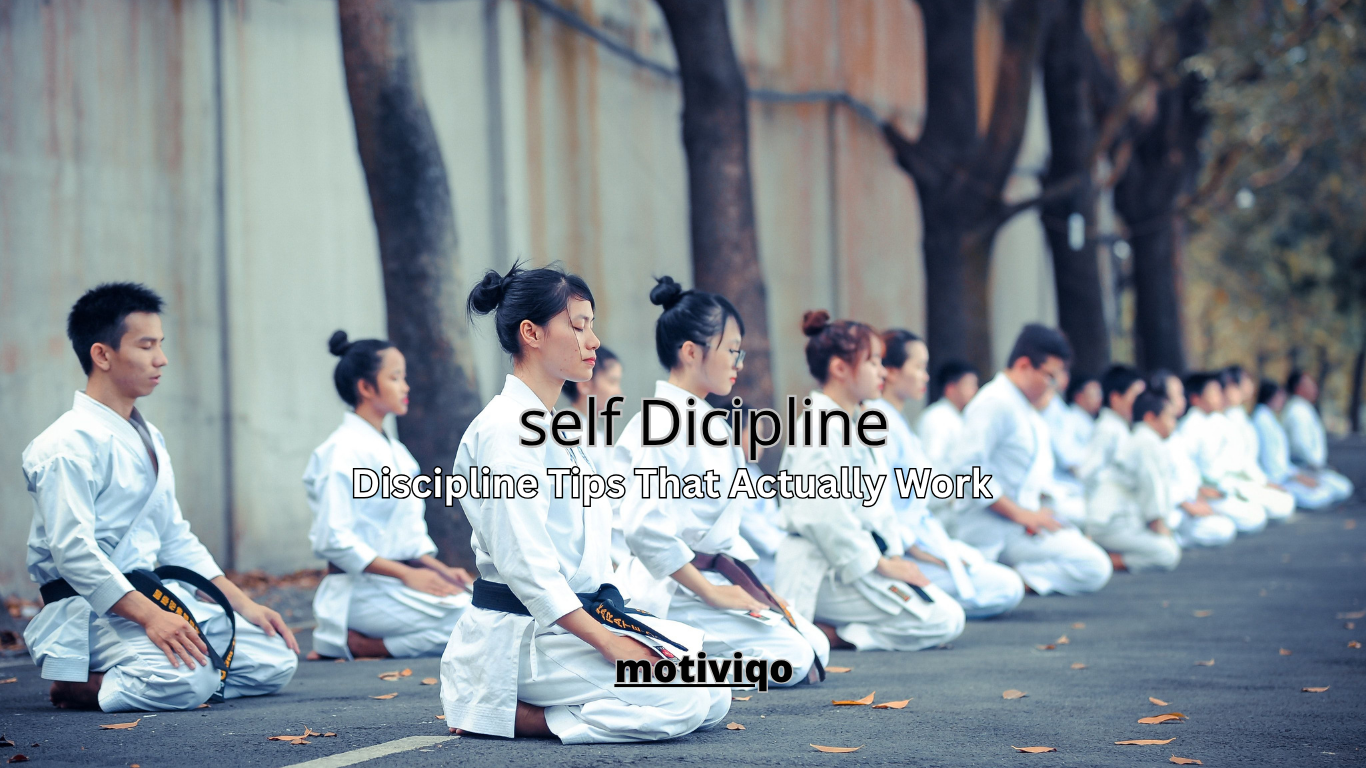
Self discipline is the foundation of success in every area of life. Whether you want to improve productivity, reach long-term goals, or gain better self-control, learning effective self discipline tips can completely transform your daily routine. Discipline helps you stay committed even when motivation fades.
Introduction Why Self Discipline Is the Key to Success
Self-discipline is the ability to control your actions, thoughts, and habits in order to achieve meaningful goals. It means choosing what benefits you long term instead of what feels comfortable right now.
Talent often fails without discipline because talent relies on potential, while discipline relies on action. Many people have skills and ideas, but without consistent effort, those abilities never turn into results.
If motivation fades, discipline keeps you moving. That’s why self discipline tips are essential for anyone who wants lasting success, focus, and personal growth.
What Is Self Discipline? (Simple Explanation)
Self discipline in daily life means doing what needs to be done even when you don’t feel like it. It’s waking up on time, sticking to schedules, avoiding distractions, and following through on commitments.Self discipline vs motivation is a common comparison. Motivation is emotional and temporary, while discipline is behavioral and reliable.
Motivation may start the journey, but discipline keeps you going.Discipline matters more than willpower because willpower is limited. Discipline uses habits, routines, and systems to reduce reliance on constant mental effort.
Benefits of Strong Self Discipline
Strong self-discipline improves focus and productivity by helping you stay consistent and avoid distractions. It helps achieve long-term goals because disciplined actions compound over time, leading to steady progress.
Self-discipline builds confidence and self-control by strengthening trust in yourself and your decisions.It also reduces procrastination and distractions, making it easier to stay focused on what truly matters.
25+ Practical Self Discipline Tips You Can Start Today
Self Discipline Tips for Mindset
Define clear personal goals so you always know what you’re working toward.
Know your “why” to stay committed during difficult moments.
Visualize long-term rewards instead of focusing on short-term comfort.
Practice delayed gratification by choosing progress over instant pleasure.
Self Discipline Tips for Daily Habits
Create a consistent daily routine to reduce decision-making and build structure.
Start with small, non-negotiable habits that are easy to maintain daily.
Use habit stacking by attaching new habits to existing ones.
Track progress daily to stay accountable and motivated.
Self Discipline Tips to Beat Procrastination
Use the 5-minute rule to overcome resistance and start tasks easily.
Break tasks into micro-steps to make them feel manageable.
Set deadlines, even self-made ones, to create urgency.
Eliminate decision fatigue by planning tasks in advance.
Self Discipline Tips to Avoid Distractions
Identify your biggest distractions so you can control them.
Limit phone and social media usage to protect your focus.
Design your environment for focus by removing temptations.
Use time-blocking techniques to structure deep work sessions.

Self Discipline Tips for Mental Strength
Practice mindfulness and self-awareness to control impulses.
Train yourself to sit with discomfort instead of avoiding it.
Replace excuses with accountability to strengthen discipline.
Learn from failure instead of quitting when things go wrong.
Self Discipline Tips for Consistency
Focus on progress, not perfection, to avoid burnout.
Build systems, not just goals, to make discipline automatic.
Reward consistency, not outcomes, to reinforce habits.
Show up even on low-motivation days to build discipline.
How to Build Self Discipline Long-Term
Discipline is a skill, not a trait. Anyone can develop it with practice.
The compound effect of small actions leads to massive long-term improvement.
Consistency beats intensity because sustainable effort wins over time.
Common Mistakes That Kill Self Discipline
Relying only on motivation leads to inconsistency.
Setting unrealistic goals creates frustration and failure.
Trying to change everything at once overwhelms progress.
Being too hard on yourself weakens discipline instead of strengthening it.
Self Discipline Tips for Students, Professionals & Entrepreneurs
For students, discipline helps with studying, time management, and exam preparation.
For professionals, discipline improves productivity, focus, and work consistency.
For entrepreneurs, discipline is essential for self-management and long-term growth.
How Long Does It Take to Develop Self Discipline?
Developing self-discipline takes time and repetition.
Habit formation varies but usually takes several weeks of consistency.
Patience is critical because discipline grows gradually, not instantly.
FAQs About Self Discipline
Can self discipline be learned?
Yes, self discipline is a learnable skill that improves with consistent practice.
Is self discipline genetic?
Discipline is mostly shaped by habits and environment, not genetics.
How do I stay disciplined every day?
By building routines, removing distractions, and focusing on systems.
What weakens self discipline?
Poor planning, lack of sleep, distractions, and unrealistic expectations.
Final Thoughts
Discipline Is a Daily Choice
Self-discipline is not about perfection it’s about daily effort.
Consistency and persistence matter more than motivation or talent.
Choose discipline every day, and your future self will thank you.
Additional FAQs
How can I improve my self-discipline?
Start small, create routines, reduce distractions, and stay consistent.
What are the 10 rules of self-discipline?
Set goals, build habits, manage time, avoid distractions, stay consistent, and hold yourself accountable.
What are 7 ways to gain self-discipline?
Clear goals, habit building, time management, focus, mindfulness, consistency, and self-tracking.
What are the 5 points of self-discipline?
Focus, consistency, accountability, patience, and self-control.
Related post: Discipline Is Reliable